Get more out of arm training.
When working in the neutral scapular plane, arm (and shoulder) musculature gain a natural mechanical advantage that allows them to do more work. All you need to do is to put your humerus in the right place.
Read more
DC, Pre-Script® Founder
When working in the neutral scapular plane, arm (and shoulder) musculature gain a natural mechanical advantage that allows them to do more work. All you need to do is to put your humerus in the right place.
Read moreThoracic rotation is driven by distinct muscular action at the top and bottom of the ribcage: the obliques act on the lower ribs, while the serratus anterior and rhomboids act on the upper ribs.
Read moreBack training adheres to a hierarchy of training variables: arm path, loading modality, resistance profiles, scapular mechanics, strength curves, and more. Arm path sits at the top of this hierarchy.
Read moreTargeted musculature, type of stimulus, training frequency, mobility limitations, concurrent pull sessions: These factors inform how to select exercises, order them within a workout, and set correspondent volume and intensity parameters.
Read more"You can't go somewhere you already are": The counterintuitive approach to ankle mobility.
Read moreLet’s be deliberate with pull day exercise selection, sequencing, and execution.
Read more
In spite of a widespread hyperfixation on nailing the perfect arm angle, lagging development of the "lower" (or "costal") division of the pec is exceedingly common amongst the bodybuilding crowd. The missing ingredient here is costal rib position: the key lynchpin of creating pec tension.
Read more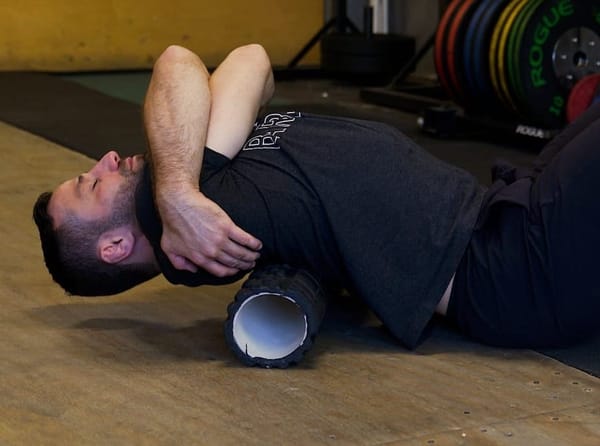
There has been an ongoing war in the fitness community between the science-based lifters and the bro-science lifters. There have been decisive victories on either side, but there's one battle that has been raging on for some time: the efficacy of foam rolling.
Read more
Whether you're training for aesthetics, athletics or rehab, the deltoid group will at some point become a primary focus of your training endeavours. Mechanically, the delt is a simple muscle to train due to its uniarticular nature, but there are complicating factors.
Read more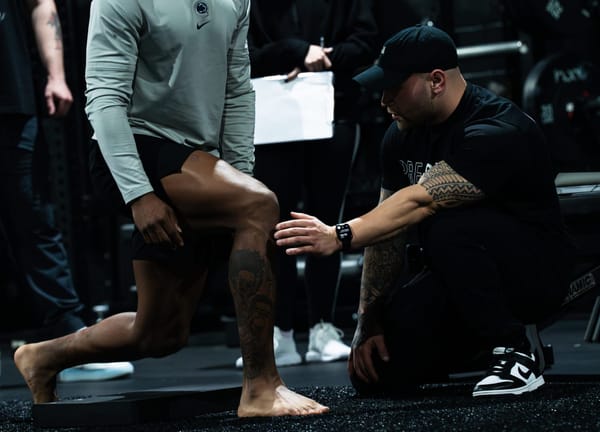
Limited ankle mobility is one of the most commonly cited range of motion restrictions in the entire body. Oftentimes a scapegoat for pain throughout the lower body or just poor technique, it's rare to find someone who doesn't complain of poor ankle mobility.
Read more